
A Nuclear Ship For Mars: Making Sense of Space Reactor Freedom
On NASA's quest to send a nuclear reactor to Mars
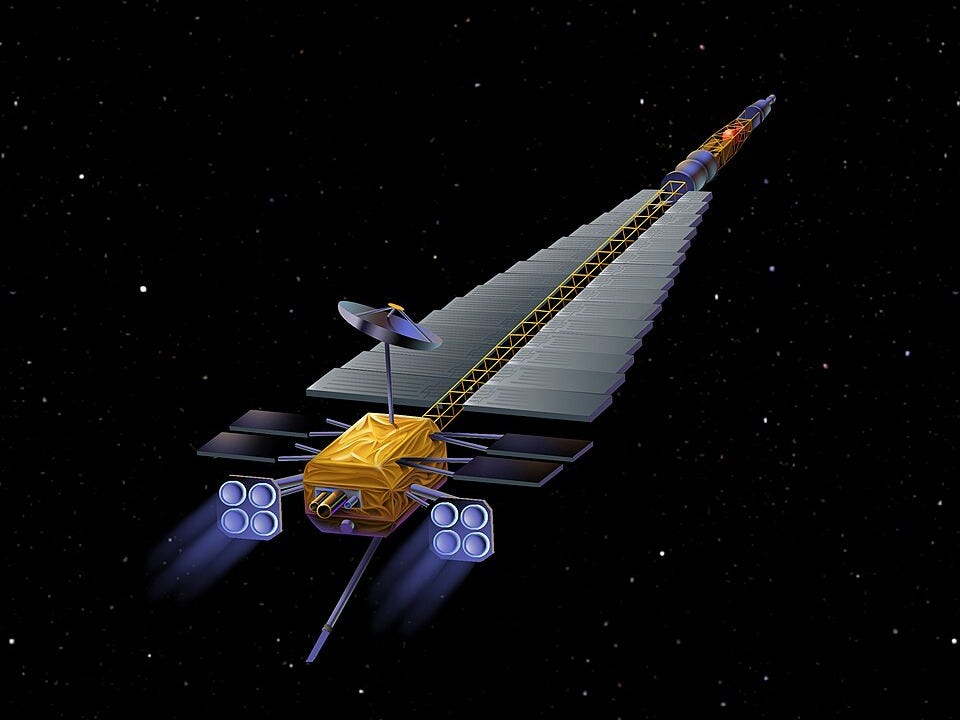
The way NASA tells it, Space Reactor Freedom sounds simple.
This reactor, of course, is a nuclear one. NASA has apparently obtained one, or at least is close to doing so, and has also found a supply of fuel. Fortunately, they also have an electric propulsion system, one they salvaged from a failed project to build a lunar space station. The two, they say, could be bolted together to form a functional spacecraft.
With that done, the whole thing will be fired off to Mars, where it will presumably play a role in spreading Freedom. This is all so easy that the agency thinks it will be ready by the end of 2028, an extraordinary pace for any government program. Afterwards, mission accomplished, Space Reactor Freedom will act as a guide for a future stream of atom-powered probes heading out to the planets.
The catch, however, is that no one has done anything like this before. The United States last launched a nuclear reactor in 1965. It never left Earth orbit, failed after six weeks, and then partially disintegrated fifteen years later. Whatever debris remains is both radioactive and likely to continue circling our planet for the next thousand years or so1.
True, the Soviets did make more serious efforts to develop the technology. Between the 1960s and 1990s, the USSR launched more than two dozen reactors, most of them short test missions. Each was shut down after a few weeks, and they were then boosted into high orbits to allow their radioactivity to decay safely away before re-entry.
Yet in 1977, one of them, a satellite named Kosmos 954, failed within weeks of launch. Finding themselves unable to boost the spacecraft or to jettison its reactor, the Soviets issued secret warnings that the satellite was out of control and falling back to Earth. Four months after launch, it hit the atmosphere over Canada, exploded, and rained radioactive debris across the Northwest Territories.
But even when it worked, the Soviet program restricted itself to niche applications in orbit. No one has ever sent a nuclear reactor into deep space, or sought to unlock the great potential the technology could offer when pushed beyond the Moon.
In many ways, that is a shame. Indeed, space agencies believe that nuclear spacecraft can push aside a lot of the constraints that hold back interplanetary travel. They can go fast, head deep into the Solar System, and carry power-hungry instruments. A nuclear probe could cut the journey time to Mars to mere weeks, carry out a detailed exploration of Saturn or Neptune, and even flit between the icy worlds of the Kuiper Belt.
All we need, if you listen to NASA, is a successful demonstration. And that is what Space Reactor Freedom is all about.
The Reasons To Go Nuclear
To get anywhere in space, you need energy.
Traditionally, this has come from chemical means: rocket engines use various chemicals as fuels, react them to produce gases, and then force them out of a nozzle. The resulting exchange of momentum pushes the spacecraft in the desired direction, rather like a sophisticated balloon carefully releasing its air.
This works, but it can be inefficient. Heavy spacecraft, especially those that head deep into the Solar System, need a lot of energy to propel them. That implies they need to carry a lot of chemical fuel. But the more they carry, the heavier they become; the heavier they get, the more fuel they need. This can quickly turn into a vicious cycle of diminishing returns, one in which every gram of extra fuel simply adds more mass and demands yet more fuel.
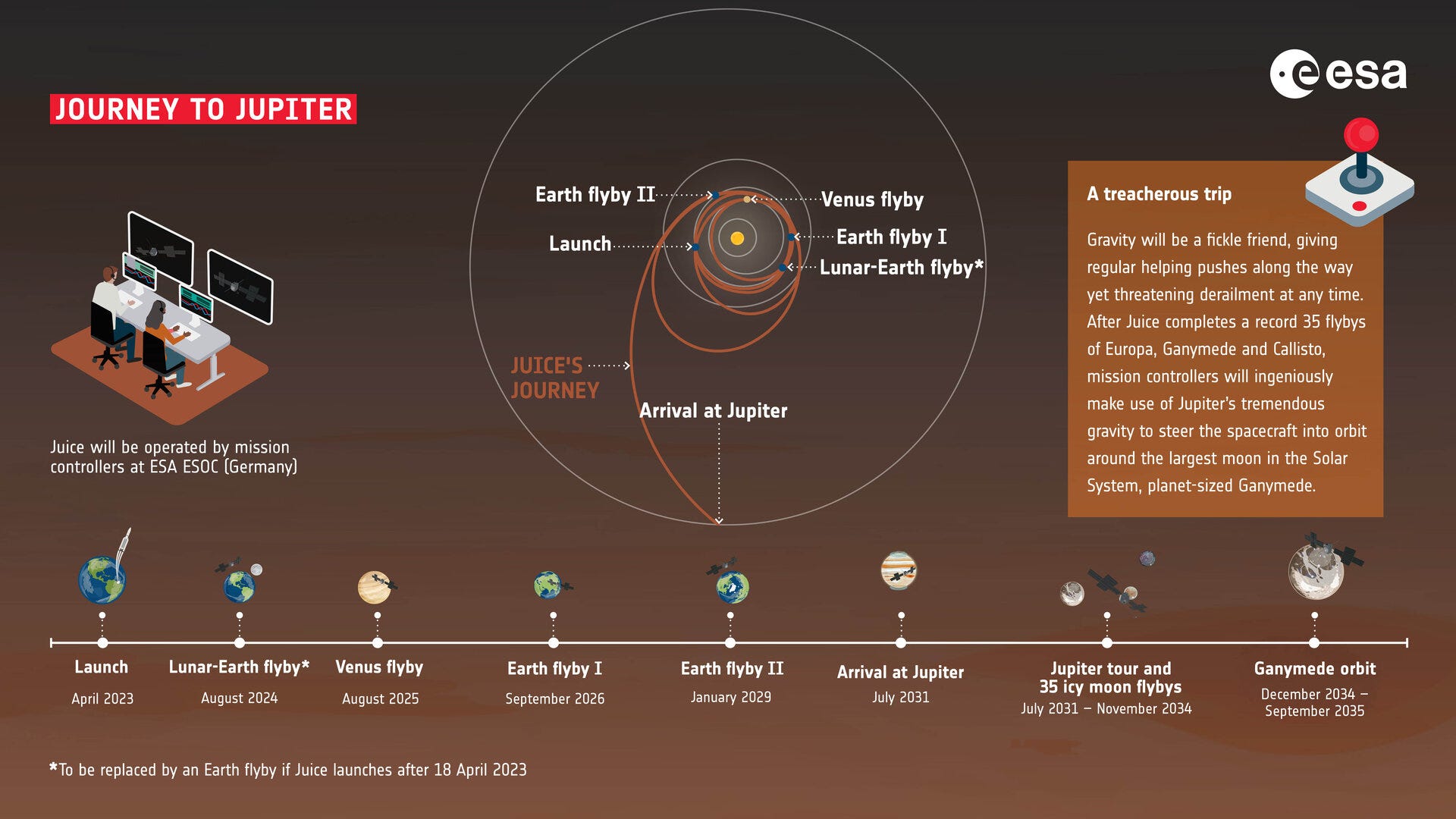
Engineers have a few ways around this problem. One is to make use of clever tricks like gravitational assists. These happen when a spacecraft flies past a planet in just the right way to get a kick of momentum, a boost that offers a free acceleration. But they come at the cost of time: Europe’s JUICE mission, for example, is in the midst of a six-year period bouncing between Earth and Venus. Only in 2029, once it has built up enough speed, will it head to its final destination of Jupiter.
A second option is to use more efficient fuels. Hydrogen, for instance, is a good choice: it is lightweight, it reacts strongly and releases plenty of energy, and, in the form of water, it is abundant on Earth. Rocket engines sometimes react it with oxygen, a process that results in hot steam and that can work more efficiently than almost any other chemical engine.
Yet even hydrogen pales in comparison to nuclear fuel. Instead of forging and breaking molecular bonds, nuclear fission splits the atom and unleashes immense energies. A uranium-based reactor produces at least a million times the energy of the hydrogen-oxygen reaction. In spaceflight, where every gram of mass must be carefully accounted for, this is game-changing.
Spacecraft equipped with nuclear engines can avoid the planetary dance taken by missions like JUICE. They can fly direct, and they can take more mass with them. The reactors provide copious power on arrival, and can run day and night. For a rover on Mars, a base on the Moon, or an explorer of Titan, this kind of capability is essential.
The Nuclear Electric Motor
There is no real shortage of ideas of how to make use of this power in space. Indeed, mad scientists have dreamed up a dozen insane variants of the nuclear engine. One concept involved chucking atomic bombs out the back of a spaceship and riding their shock wave out to the stars. In principle it works. In reality this would be impossible to control, hazardous to literally everyone, and a dangerous lunacy to even think about trying.
More sensible is the radioisotope thermoelectric generator. This a device that relies on radioactive decay. It is fuelled by some kind of nuclear material – plutonium-238 is a common choice – and simply uses the heat produced by its decay to generate electricity.
Generators like this are sometimes used for flights into the outer Solar System. Beyond Jupiter, the Sun’s rays fade rapidly, and so solar power cannot keep distant probes running. Radioisotope generators can – and they have been used in missions like Cassini to Saturn, the Voyagers and Pioneers, New Horizons to Pluto and beyond, and on rovers on Mars.
But these are relatively simple nuclear devices, and rarely used for sustained propulsion. Space Reactor Freedom follows an alternative model, that of nuclear electric propulsion. Rather than rely on radioactive decay, it will use a reactor to create a controlled chain reaction. This produces a supply of heat, and that is then converted into a steady current of electrical energy.
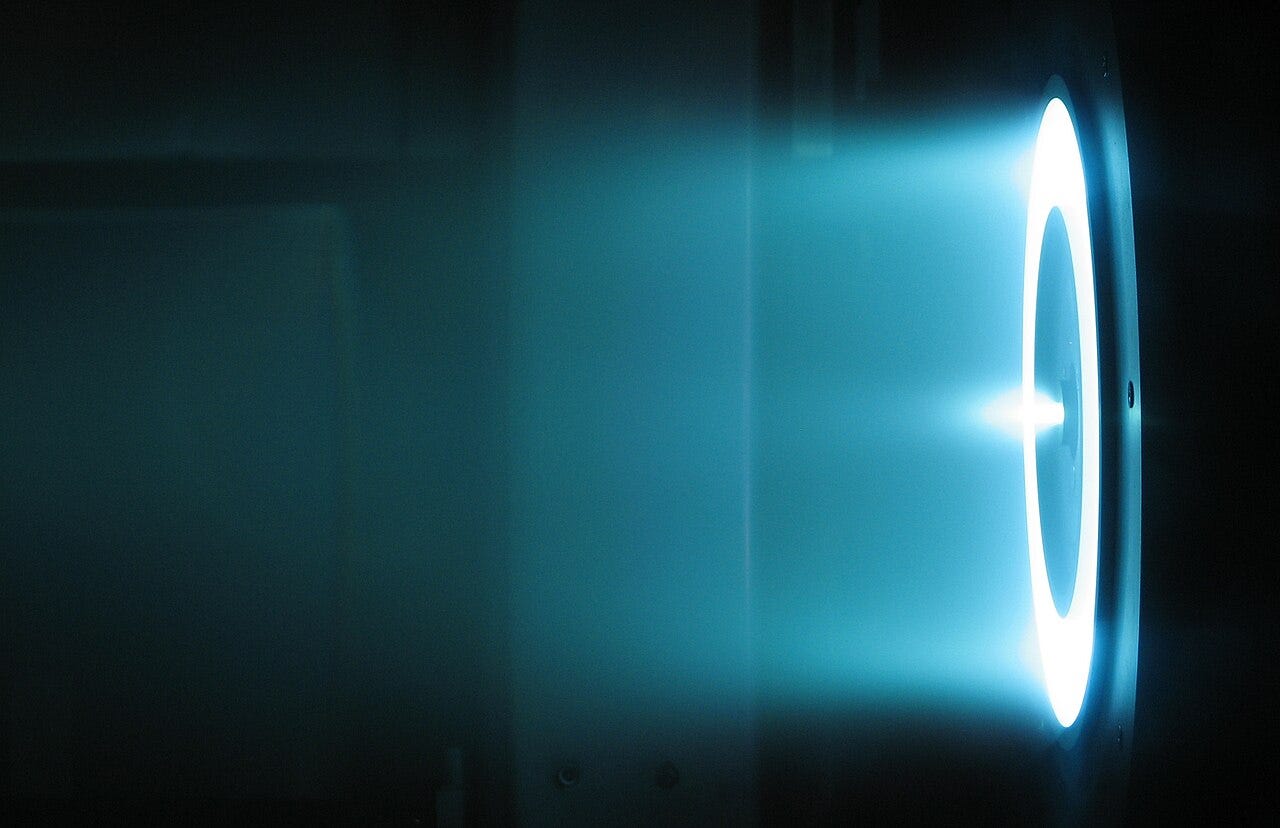
The power is then fed into an electrical thrust system. Instead of ejecting gases, these expel charged particles, often in the form of Xenon atoms stripped of an electron, thus creating the desired exchange of momentum. Unlike in chemical rockets, this thrust can be maintained for a long time. Some trials have even produced sustained thrust lasting months at a time.
But until now, electric propulsion in space has always been limited by the power available. Solar is the usual source, and no electric engine has ever exceeded a handful of kilowatts. Nuclear reactors can lift that constraint. They can produce hundreds of kilowatts, even megawatts, and allow the true power of electric propulsion to be unleashed.
A two-hundred-kilowatt electric engine, one ten times more powerful than anything built so far, could send a twenty-ton spacecraft to Jupiter in less than five years. A megawatt reactor, one still easily within the bounds of possibility, could reduce the journey time to Mars to about twelve weeks. More powerful reactors could ship cargo to the moons of Jupiter, to Saturn, and to the very edges of the Solar System.
Space Reactor Freedom
Before all that, NASA needs to demonstrate the concept.
The plans for Space Reactor Freedom are still vague. The details we do have, however, suggest that NASA is prioritising speed over everything else. Nuclear propulsion is not a new idea, they said at a presentation in March, but rather something that has long suffered from poor execution. Over the past six decades, the agency has launched twelve nuclear efforts, yet put nothing more than a single short-lived satellite into orbit.
Their goal is to change this. NASA wants to go fast. They have set a target of launching in 2028, and they want to follow a design based on established technology. Indeed, they think much of the development work is already done, and that the remaining challenge is more about integrating the components than building them.
At the heart of the spacecraft will be a twenty-kilowatt reactor. Details about this are sparse, but NASA boss Jared Isaacman said it was already ‘mostly built’. Yet where it is, and who built it, remain unknown to the public.
This reactor will be mounted on a module originally planned for the Gateway, a space station that was supposed to be placed around the Moon. But that station is now on pause, and the module, which is equipped with electric propulsion systems, could be integrated with a nuclear power source.
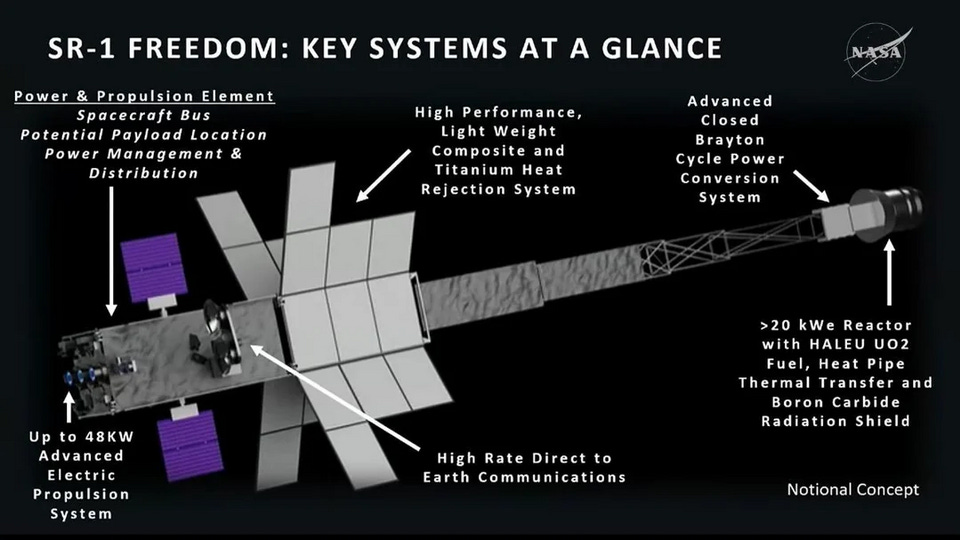
Again, details of how this would work are limited, but assuming it can be done, NASA would then have a spacecraft capable of travelling to Mars. Onboard, the agency would put a payload of helicopters, each similar to the small Ingenuity helicopter that flew over the sands of the Red Planet a few years ago.
These helicopters would send back some interesting data, but the science is not really the point of this mission. Instead, Isaacman sees it as a way to prove nuclear technology can work in space. He hopes it would be followed by a series of more powerful missions. These will unlock the full potential of nuclear propulsion, and act, as he puts it, as the ‘transcontinental railroad of the Solar System’.
The deadline of 2028 is still ambitious. Even if the technology is already there, anything nuclear will face regulatory hurdles. The reactor will need to be safe – an accident could be fatal to the dream – and ensuring that will take time. So will the steps of making sure the design actually works. But Isaacman is still right to challenge NASA to move fast.
Indeed, the future direction of space exploration may rest on his success. If the reactor flies – whether that is in 2028 or in the early 2030s – it should inspire future missions to Mars, to Jupiter, and beyond. The road ahead is surely more challenging than NASA will admit now, but once the tech is in place and proven, then the outer Solar System awaits.
Why Have There Been So Many Fireballs in 2026?

In March, a chunk of rock and metal appeared over Lake Erie, flew at supersonic speed over northern Ohio, and then blew up in a deafening explos…
The Moth and The Aurora: The Work of Étienne Léopold Trouvelot

In the 1860s, the American Civil War cut off the supply of cotton to the textile mills of New England. The solution, Étienne Léopold Trouvelot thought, might be found in moths. With the right kind he could produce silk, and with this he could alleviate the shortage.
What Lies Beyond: Exploring Interstellar Space

The scale of things is hard to grasp. The distance from Earth to the Moon - some four hundred thousand kilometers - is the shortest cosmic scale of any significance, but one that already stretches th…
The logic of radioactive decay inverts the usual desire to remove debris from orbit as soon as possible. In such cases, it is better to leave radioactive material in space, allow it to safely decay, and only let it re-enter once the radiation has fallen to safe levels.
The lack of detail released this far is killing me. I am glad, however, that NASA is pursuing more ambitious projects instead of that dumb Lunar Gateway.
If Issacman can succeed in getting NASA to stop funding political campaigns and actually refocused on transformative breakthroughs again, we are all in for a real treat.
Hold up - The Three-Body Problem taught me that chucking nuclear bombs behind a spaceship was totally legit.