
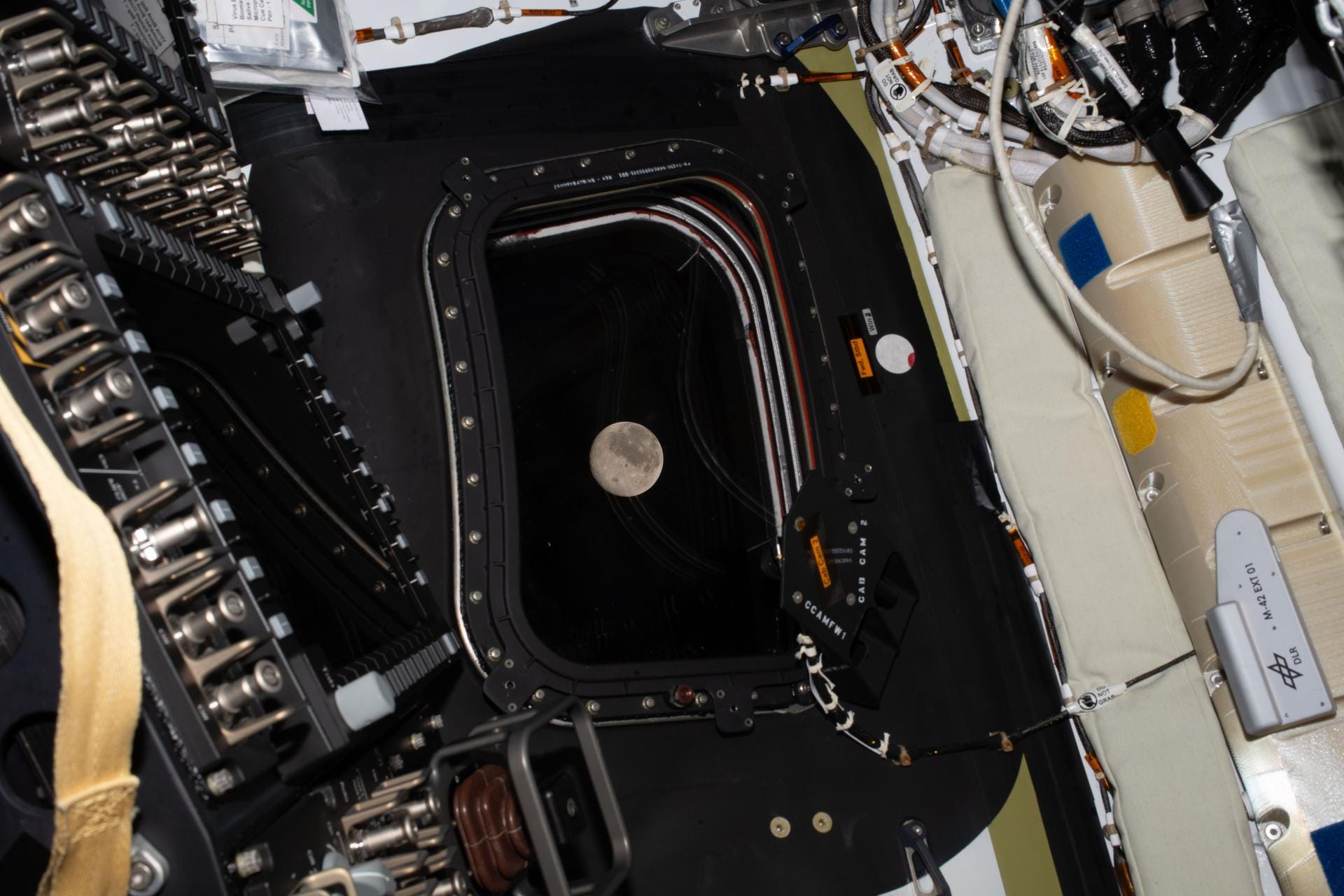
For the first time in half a century, humans have flown over the surface of the Moon.
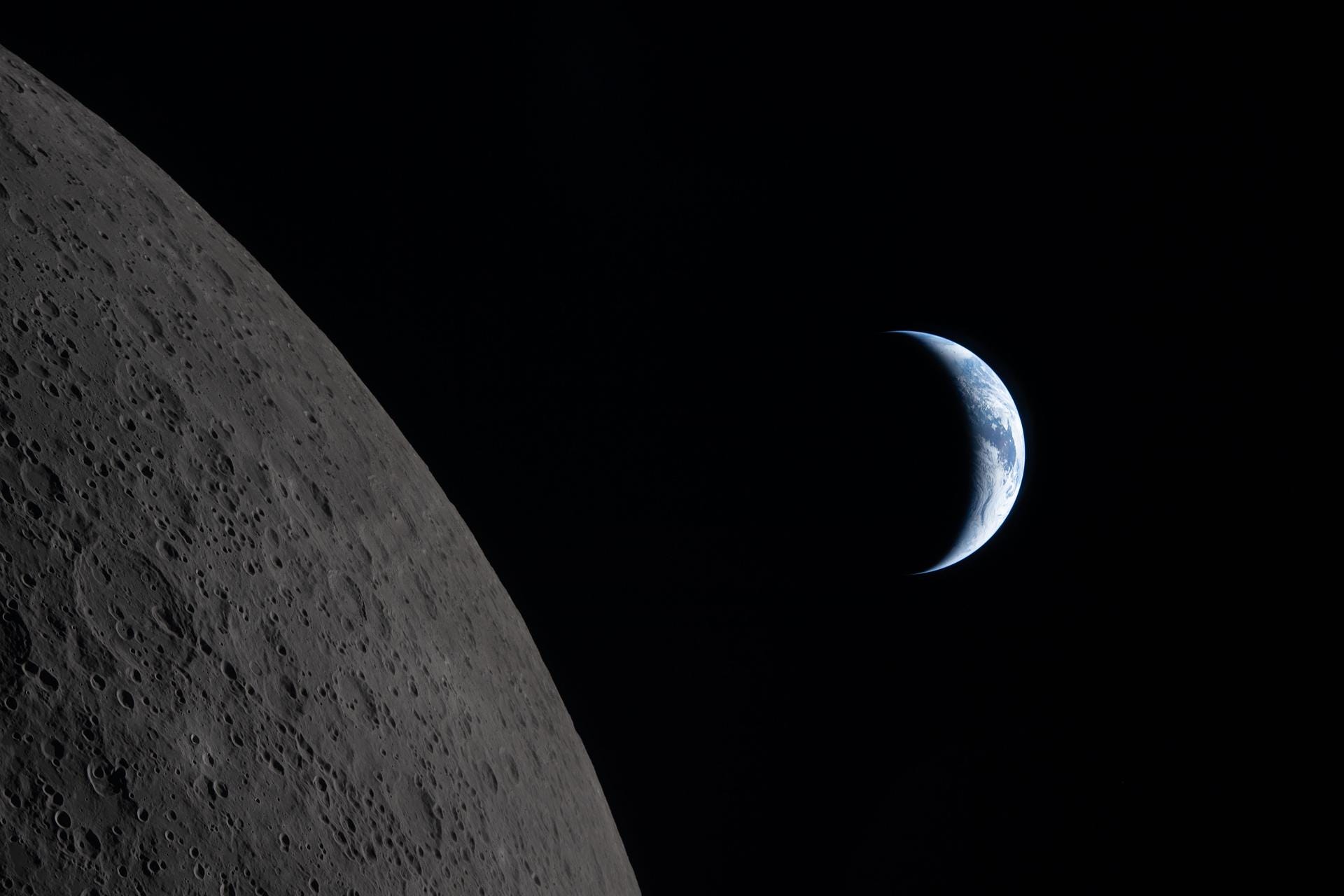
The moment of closest approach came on Monday evening. After flying for six days, the Orion capsule came within four thousand miles of the surface. From inside the capsule, astronauts were able to view the face of the far side of the Moon, and so observed, NASA said, parts of the lunar surface that had never before been seen directly by human eyes.
Shortly before this close approach, the Orion capsule passed a symbolic milestone by becoming the first crewed vehicle to travel more than a quarter of a million miles from Earth. The astronauts on board Orion thus became the most distant travellers from our planet in all of history.
As they broke this record, Jeremy Hansen – the Canadian astronaut on Orion – paid tribute to the ‘extraordinary efforts and feats’ of their predecessors in space exploration. It would, he hoped, be a short-lived record, one that the next generation of explorers should take it upon themselves to far exceed.
While they passed over the Moon, the astronauts studied the lunar surface and relayed comments back to scientists on Earth. Briefly they also experienced a remarkable solar eclipse, during which they were able to see the solar corona extending around the Moon and observe flashes of small meteorites hitting its surface.
Overall, the mission has gone better than most people had expected. The launch, on April 1, came within minutes of the launch window opening and placed Orion almost exactly where mission planners had targeted. The capsule itself has performed well, and aside from a few problems with the onboard toilets – not, sadly, uncommon during spaceflight – the life support systems have apparently functioned well.
Engineers did notice issues with helium leaking from propulsion systems at a higher than expected rate. This helium is used to keep the spacecraft’s fuel at the correct pressure, and is normally confined by a set of valves. Though the leak is not an issue for the success of Artemis II, it will likely trigger a redesign for future versions of the capsule.
The next big challenge will be the re-entry. Orion will hit the upper atmosphere at twenty-four thousand miles per hour. It will need to lose almost all that speed in less than fifteen minutes, during which time the capsule will be exposed to a furious heat and pressure. To keep the crew safe, Orion is fitted with a heat shield.
Yet this shield has been a matter of some controversy. During the previous flight of Orion, the shield did not behave as expected. Engineers thus modified the re-entry trajectory of Orion to try to avoid any risk – but this does mean the crew are relying on a shield that has not been fully tested and that may not perform as well as it should.
The risk to the crew, NASA said, is low. But all will no doubt be breathing a sigh of relief as soon as Orion is spotted descending gently towards the waves under a canopy of parachutes.
Ignition For a New Golden Age?
After Artemis II, what comes next?
At an event at the end of March, NASA laid out an ambitious vision of its future. Key to this is a series of planned missions to the Moon, together involving robotic explorers, crews of astronauts, and the building of a lunar base. But NASA also wants to build nuclear-powered spacecraft and find a new future for the International Space Station.
Under the new timeline, the next Artemis mission will launch in 2027. It will not go to the Moon, but will instead stay in orbit around the Earth. NASA will use the mission to practice docking with the proposed landers – one, Starship, built by SpaceX, and the other, Blue Moon, built by Blue Origin.
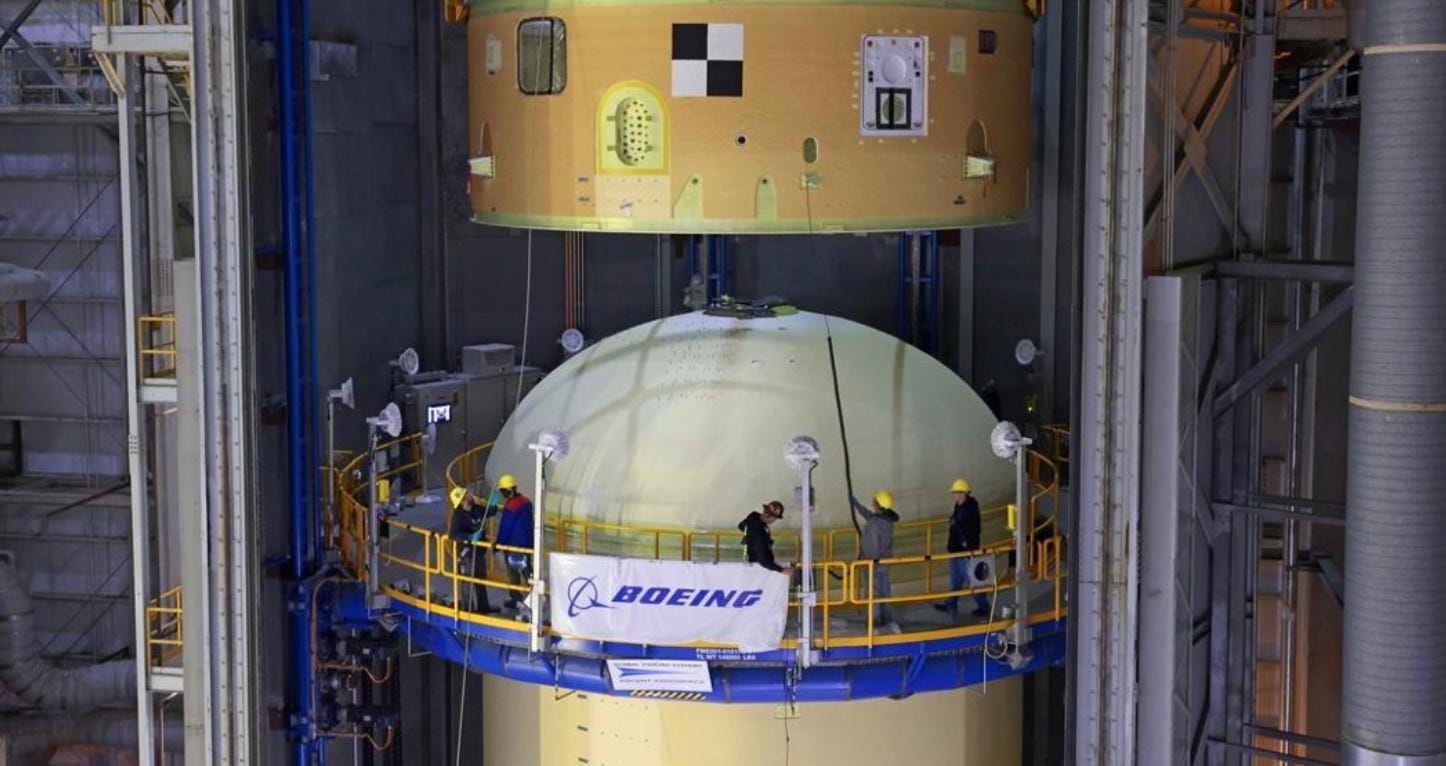
This, NASA boss Jared Isaacman says, will be followed by two missions to the lunar surface in 2028. Both will take crews to the surface, and will be the first of a long series of missions taking place every six months. Alongside these, NASA will send twenty robotic missions to the Moon, including the previously cancelled VIPER rover.
NASA’s Artemis plans had, until now, included a lunar space station called the Gateway. Work on this was proceeding slowly, and it was unlikely to be built until the 2030s. NASA has now called time on it. In place of the Gateway, Isaacman wants to direct efforts towards building a lunar base. It is this project that will be supported by many of the crewed and robotic missions he foresees over the next decade.
Closer to home, NASA has also rethought the future of the ISS. At the moment this is supposed to be retired sometime in the early 2030s. But Isaacman now proposes attaching a new module to the station. This – a core module – will contain the key functions needed to support a space station.
Commercial partners could attach their own modules to it, allowing NASA to build a kind of hybrid commercial station. But it also seems possible the module will help extend the life of the station, and perhaps make it less reliant on the Russian segment. The end result could be an extension of the ISS, or at least a core that could support a new, smaller station in the future.
All this is exciting. But it is also expensive, and far from fully funded. Congress will need to approve the plans and agree to pay for them. That, in a week when President Trump proposed cutting NASA’s budget by a quarter, promises to be the biggest challenge of all.
Hubble Watches A Comet Die
A year ago, astronomers spotted a comet heading towards the inner solar system. It was named C/2025 K1, and measurements of its orbit soon showed that it was probably a fresh comet, one that had fallen from the distant Oort Cloud and that had never before passed close to the Sun.
Despite its size – the comet measures about five miles across – astronomers thought it was unlikely to survive its encounter with our star. Indeed, at its closest the comet passed closer to the Sun than the orbit of Mercury, and the heat of this close approach placed immense strain on the icy object.
About a month after the comet had passed the Sun, the Hubble telescope captured some images of it. They show the comet breaking up – instead of a single lump of ice, several large fragments were visible. These fragments were not themselves stable. Indeed, even as Hubble watched, one of them broke apart into several smaller pieces.
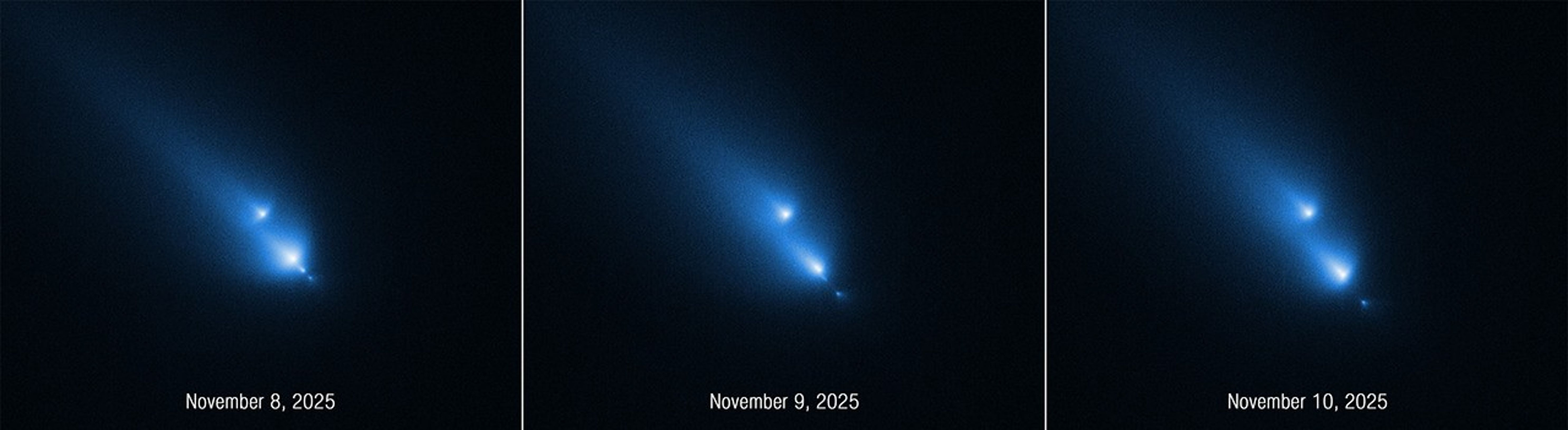
Thanks to Hubble’s images, astronomers were able to trace back the timeline of just how the comet had disintegrated. Each event in its break-up exposed fresh, pristine ice from its interior, and astronomers now hope to study how this ice behaves as it is exposed to sunlight for the first time.
The surviving fragments of the comet are now heading back towards the outer solar system. A million years from now they may exit it entirely, and then go on to drift through interstellar space. But at least one fragment might remain bound to the Sun. If it does, it may yet return to the inner solar system one day in the far distant future.
A Flood of New Asteroids
Astronomers working at the Vera Rubin Observatory in Chile announced the telescope had discovered over eleven thousand new asteroids. This haul came even though the observatory has not yet started its main mission, and was based on observations taken during work to optimise its performance.
Among the thousands of new asteroids are thirty-three Near-Earth Objects. As these can potentially threaten Earth – one need measure only a few metres across to cause an impact – astronomers are keen to find and track as many as possible. Fortunately, none of those spotted by Rubin are likely to hit Earth any time soon.
Looking further out, Rubin also saw hundreds of comets and asteroids lying beyond the orbit of Neptune. Only about five thousand such objects are currently known. With the aid of Rubin, astronomers hope to increase that number at least tenfold in the next few years.
Read More
The Bold Insanity of Artemis II: America Prepares to Return to the Moon

If NASA keeps the schedule, the moment of lift-off will …
Starship II: The Return to the Moon

This article is the second in a series on SpaceX’s Starship rocket. Parts of this series, including this article, will initially be available only for paying subscribers. If you are not already a subscriber but would like to support my work and help me spend more time researching and writing articles,
Artemis I: A Guide to NASA's New Moon Rocket

Last time America went to the Moon, in 1972, half a million people turned up to watch. Things didn’t exactly go smoothly. Moments be…
Here is a new hypothesis (osim forensic cosmology hypothesis v2.2): We tried to phrase this so everyone could get a visual of how it would work:Think of the universe not as a digital computer program, but as a giant, perennial tomato plant.
a tomato plant grows, produces fruit, dies back in the winter, and its seeds wait in the soil to sprout again. It does not need a programmer to tell it how to grow; it follows an internal, biological blueprint. Our independent research group is investigating whether the universe might follow a similar, naturally cyclical pattern.
Rather than a one-time Big Bang, recent discussions in the scientific community are exploring the Big Bounce an infinite, cyclical process. Our hypothesis suggests that instead of expanding forever, the universe might reach a limit, contract, and bounce back, with biological systems potentially acting as the most efficient way to store and reset information through each cycle.
A tomato plant does not stop at one fruit; it branches out, growing multiple stems, each producing its own fruit. If our universe follows this biological blueprint, it would not just seed our own galaxy. Instead, we may be looking at a system that grows fruit—galaxies—along every stem of the cosmic web. Each galaxy could be a localized site for life to bloom within the larger, cyclical structure.
Dark matter may act as the trellis for our cosmic tomato plant. It provides the gravitational structure that guides the growth of these stems, serving as a road map that ensures the system develops and resets in a way that allows life to re-emerge across the entire plant.
The Oklahoma Constant ($\Omega_{os}$) is the focal point of our research. We propose this constant as a way to measure Goldilocks Entropy—the narrow, stable energy range where life can persist without the system stagnating. It may be the tuning knob that explains why the universe stays just right for consciousness to emerge on every stem, cycle after cycle.
Because this model emphasizes biological efficiency, we suggest the possibility that we are the hardware, not the software. If this is a biological system, our consciousness and our physical form may be the fruit of this cosmic garden, essential to how the system functions.
We are currently tracking data from the Simons Observatory. They are looking for specific ripple patterns in the ancient light of the universe—echoes of a Big Bounce. If they find these signatures, it would provide evidence that our hypothesis is on the right track.
This is Forensic Cosmology. We are moving away from the who—a creator—and focusing on the how—the blueprint.
Our hypothesis is strictly falsifiable. If evidence confirms the universe will continue to expand indefinitely toward a Big Freeze, our Life-Raft model is incorrect. If a non-biological material is ever proven to exceed the efficiency of biological systems, the premise of the Oklahoma Constant ($\Omega_{os}$) fails.
We are not looking for a coder. We are documenting the physical fingerprints of a system that may be preserving life through an infinite, natural cycle.