
The Week in Space and Physics: The Sign of a Passing Star
On comets and passing stars, a pause in operations at the Large Hadron Collider, Euclid's image of the Milky Way, and more hints of life on Mars.
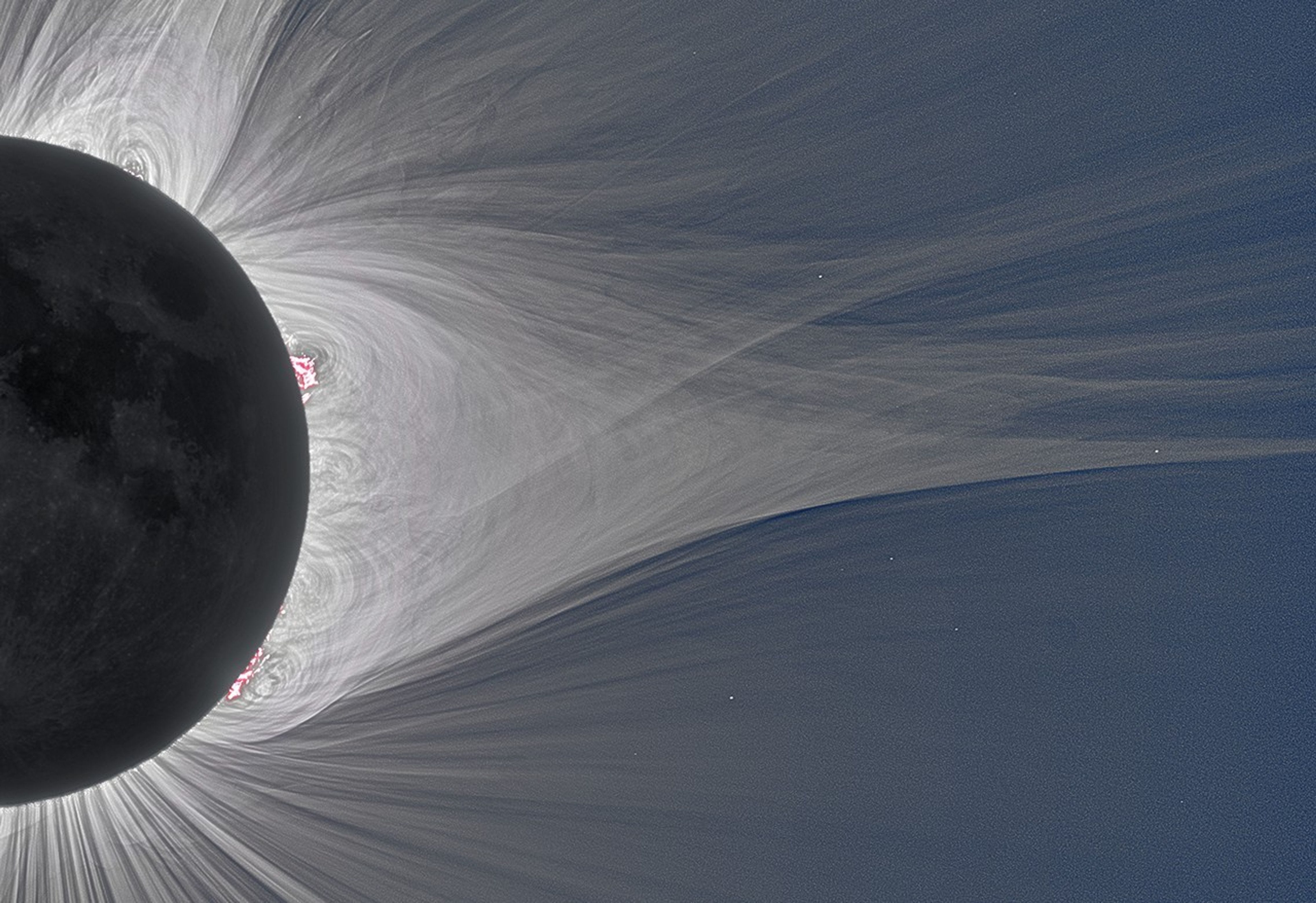
Far out in space, far beyond the orbits of Neptune and Pluto, beyond even that of Sedna, lies a vast cloud of ice and dust.
This cloud extends far around our Solar System. It is called the Oort Cloud, and although we have never directly seen it, bits of it occasionally fall into the inner Solar System. When they do, they appear as comets, tracing long orbits from the outer ice to the inner warmth. Some of them, the longest of the long-period comets, can spend a million years or more falling inwards from the Oort Cloud until the moment they appear in our skies.
Because the Oort Cloud is so big – stretching outwards for at least a light year – astronomers have long thought it should occasionally be disturbed by passing stars. At times these stars can come surprisingly close to our Sun, and when they do, their influence should upset the orbits of objects in the Oort Cloud.
Some objects will be thrown outwards. Indeed, the handful of interstellar comets we have seen may be the result of something similar happening around other stars. But some will be knocked inwards. And this should create something like a shower of comets falling towards the inner Solar System; a visible marker of passing stars that appears a few hundred thousand years after they arrive.
Data from the Gaia telescope tells us that one such star should have approached about two and a half million years ago. That star – HD 7977 – currently lies two hundred and fifty light years from Earth. But its trajectory shows that it must have passed close to us. Exactly how close is uncertain, but it may have come within a fifth of a light-year of the Sun.
That would put it well within the Oort Cloud. In a recent pre-print paper, two researchers – Nathan Kaib and Sean Raymond – modelled the effect this close passage would have had on the Solar System. Like previous studies, they found that HD 7977 would have sent a wave of comets raining down on the inner planets.
In an effort to work out how close HD 7977 came, however, they modelled different possible close approaches. They then compared the results of these models with the orbits of real observed comets. These, they found, show a pattern that can be explained if HD 7977 had passed within a tenth of a light-year of our Sun.
That is remarkably close, perhaps closer than any other star has come in the past few hundred million years. If the conclusions are accurate, then this approach could even have altered the orbit of our planet, changed the climate, and so affected the course of evolution at a critical moment for the origins of our species.
More data from Gaia will be released in the next few years. When it is, astronomers hope to better pin down the trajectory of HD 7977, and thus work out with more accuracy how close it came to the Sun. If we can do that, we can more precisely model the impact it must have had on the Solar System and on us.
If Kaib and Raymond are right, though, we are still living through the aftermath of this close approach. Though HD 7977 is now two hundred and fifty light years away, the comets we see in the sky today may still be part of a long shower triggered by its ancient passage.
Time for an Upgrade at the Large Hadron Collider
The Large Hadron Collider is a marvel of modern engineering. It is the world’s largest and highest-energy particle collider, a machine that has the power consumption of a small city, and that collides sub-atomic particles with a ferocity seen nowhere else on Earth.
This all means it can probe the laws of physics at a deeper and more fundamental level than any other scientific experiment in the world. Yet, last week, on June 29, the instruments of the Large Hadron Collider ceased work. The particle beams were shut down, the collisions put on hold, and the experiments suspended.
For the next two years, its engineers and scientists will conduct a campaign to maintain, repair, and upgrade the collider. This effort, named the Long Shutdown 3, should result in an enhanced machine. By the end, it will be capable of more particle collisions than ever achieved in the past.
Yet the amount of work that must be done to meet this goal is considerable and highly challenging. Over the next few months, operators will need to warm up the collider’s superconducting magnets. These are normally kept at a temperature just two degrees above absolute zero. Warming them to a temperature where they can be accessed and repaired takes several months alone.
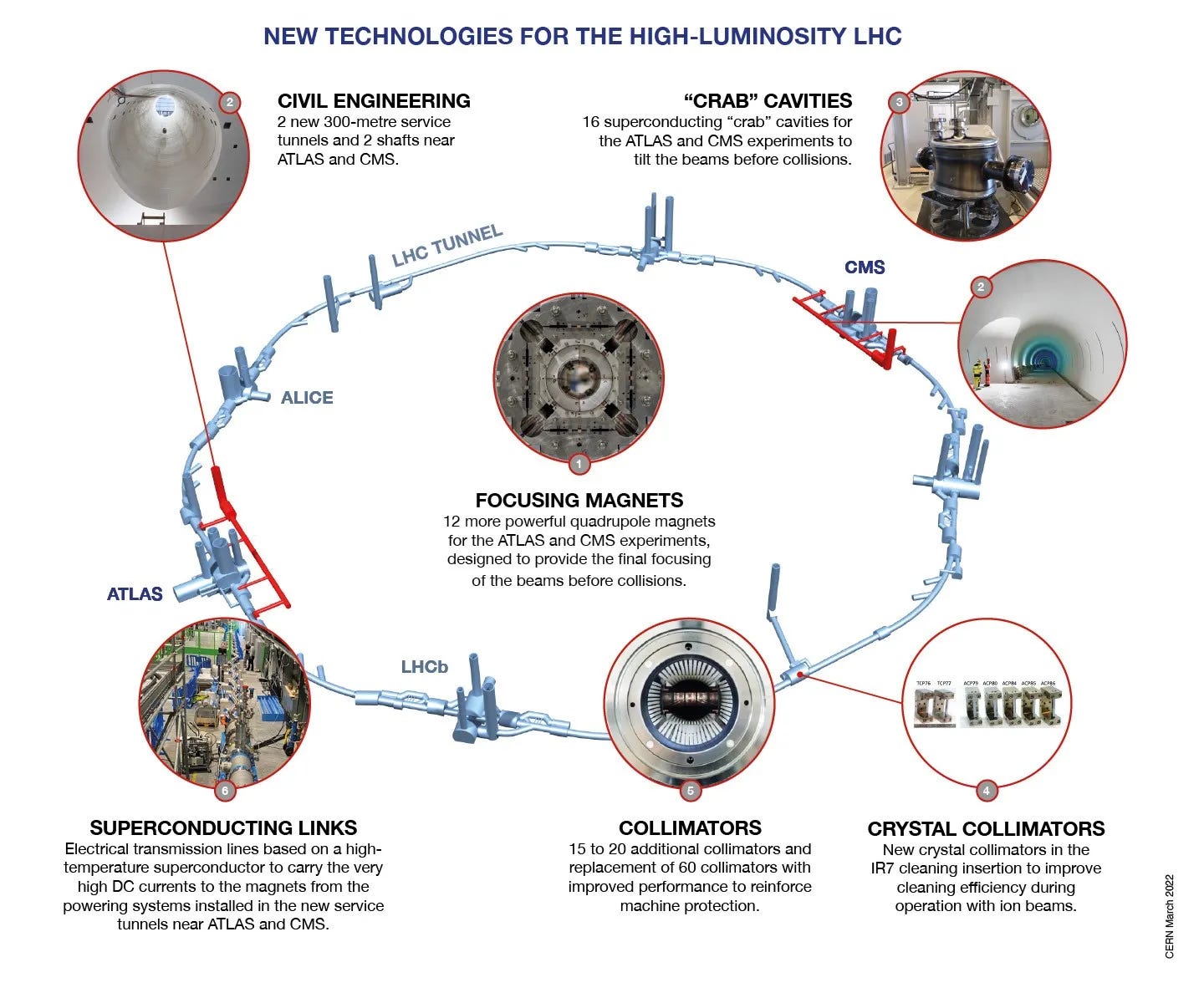
After that, engineers will reconfigure many of the instruments and experiments deployed at the collider. One key target is to increase the luminosity of the collider – a measure, essentially, of how many collisions take place when its beams cross. The higher its luminosity, the more data the collider can gather.
This work, CERN says, will have two key benefits. First, there is the engineering knowledge gained. The LHC operates at the frontiers of our abilities, and upgrading it forces innovation in fields from superconductivity to industrial engineering. But second, of course, is the opportunity for new science.
The upgraded LHC will produce much more data on particle collisions, and offer a more stringent test of how the fundamental laws of nature operate. There is nowhere else on Earth capable of matching this ability. If we want to make discoveries about the subatomic world, this upgrade may be our best hope yet.
Euclid Paves the Way for Roman
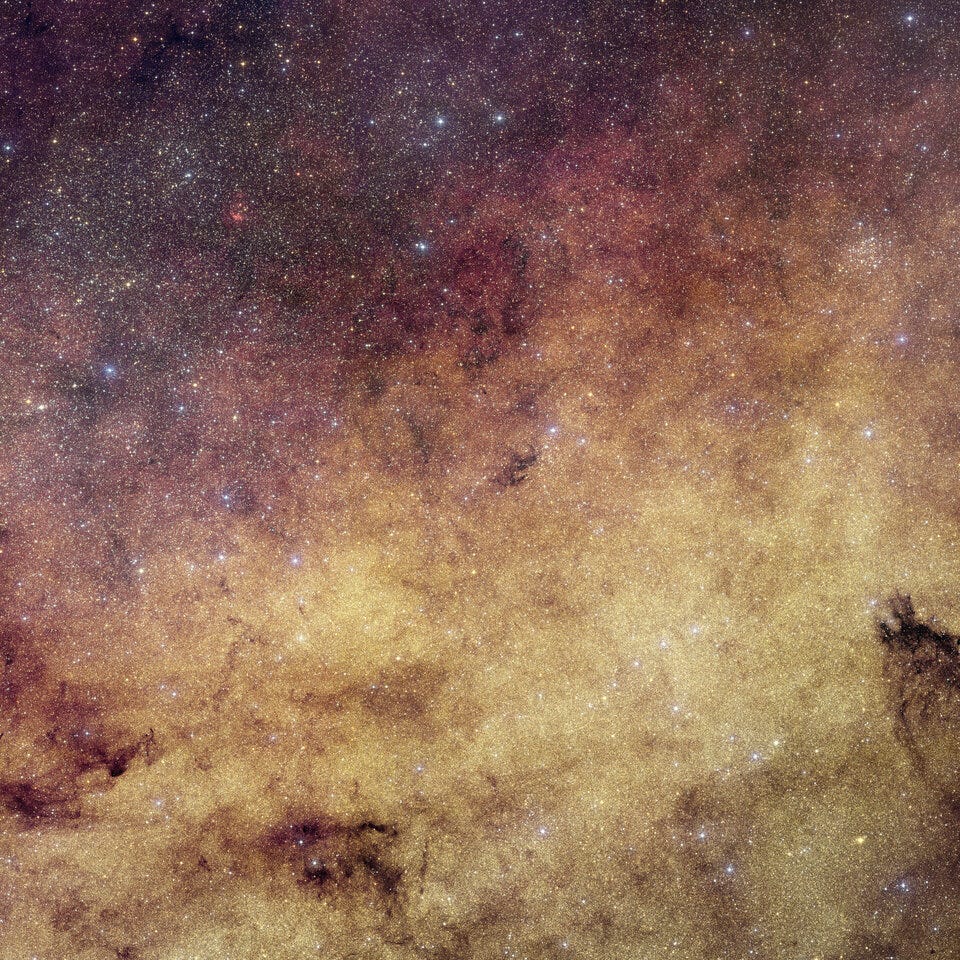
At the end of June, the European Space Agency released the largest and most detailed image of the centre of our galaxy yet captured. It shows more than sixty million stars, almost all of them crowded into the central bulge of the Milky Way, and was captured by the Euclid Space Telescope.
In some ways, this image was an exception for Euclid. Most of its time is spent surveying distant galaxies, an effort that should help astronomers map the distribution of dark matter throughout the cosmos. Images of our own galaxy, no matter how beautiful they are, don’t do a lot to help with this goal.
But they will help support the efforts of an upcoming telescope. In August, NASA hopes to launch the Nancy Grace Roman Space Telescope. Although its domain of work will be wide, this new observatory will dedicate some of its time to monitoring the heart of our galaxy. Astronomers expect this study will help spot tens of thousands of new stars, planets, and other things like black holes.
Euclid’s operators thus accepted a special request to get an early start on this survey. Over a period of about twenty-six hours, they paused the observatory’s main work and redirected it towards the heart of the galaxy. The resulting image – both beautiful and unprecedented – offers a preview of what the Roman telescope will do, and gives astronomers an early start on their ambitious effort to monitor the centre of the Milky Way.
A Trace of Life on Mars?
Over the past two years, scientists have been investigating possible traces of ancient life on Mars. These are not fossils, or even anything close, but rather chemical and mineral signatures that may have been deposited by simple life forms living in the rivers that once flowed over the Martian landscape.
This evidence, they concluded last year, is a potential sign of life but not a certain one. The minerals, which were uncovered by the Perseverance rover, could have been created by biology. But they could also have been created by a chemical or geological process, and so far we cannot rule out that possibility.
Now, new evidence has emerged from Perseverance’s instruments. One of these, a device called SHERLOC, spotted signs of large carbon-containing molecules. These were found both near the intriguing minerals and on another rock lying about a hundred metres from it.
On Earth, such molecules are often made by living organisms. Yet they can also be made by other processes – perhaps by chemical reactions, or by the fall of a meteorite. As before, these represent a potential sign of ancient life. But the evidence is still not conclusive.
Read More
What Lies Beyond: Exploring Interstellar Space

The scale of things is hard to grasp. The distance from Earth to the Moon - some four hundred thousand kilometers - is the shortest cosmic scale of any significance, but one that already stretches the imagination. The Apollo astronauts took three days to traverse that distance; a span that light, the fastest thing in the cosmos, takes a little over a se…
How Gaia Mapped The Milky Way

In 1138, the Ceutan geographer al-Idrisi set out to map the world. This was no easy task. Few maps of any practical kind then existed, and those that did depicted more dragons and demons than coastlines and cities. Only seafarers had charts of any accuracy, but even these were fragmented and limited in scope.
What Was 'Oumuamua? A Piece of Alien Space Trash? A Dark Comet? Or An Interstellar Iceberg?

At first we thought it was a comet. That made sense. Comets often come from far away, and this one seemed to have come almost from the stars themselves. Yet the more we looked at it, the stranger things got. This, if it really was a…
Rewatched Total Recall (my kid had never seen it, criminal) and that Mars Terraforming scene at the end is nuts. Atmosphere in minutes! Phillip K Dick knew what was up (or at least the screenwriters).
Dick wrote that book when I was 1; movie came out in 1990; we’ve learned lots about Mars recently.
Wonder if Elon has seen it and he wants to be Cohaagen.
When you think about it, the odds of finding evidence of life on Mars, a desert planet, are astronomically low. What are the odds of dropping a robot randomly into any Earthly desert and finding anything that is/once was alive? Mars is a big place and we only have a tiny data set to work with.