
The Week in Space and Physics: The Origins of an Interstellar Comet
On what the water of 3I/Atlas tells us, the strength of gravity, space tourism, and the oddities of the B meson
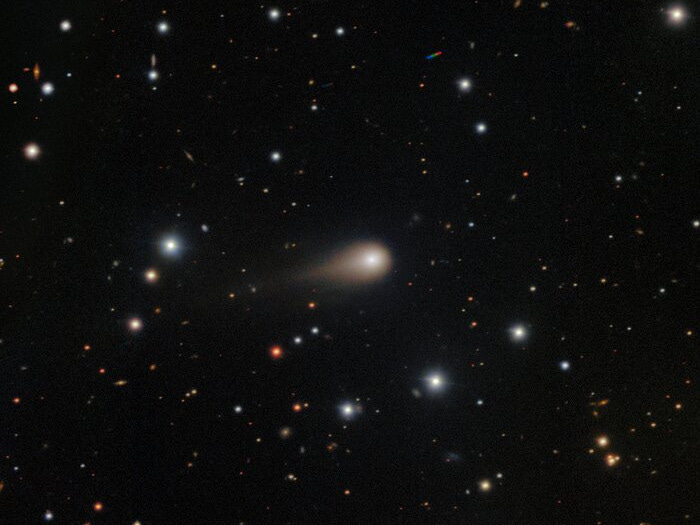
Where did the comet 3I/Atlas come from?
It was not born in our solar system. Instead, the comet came from the stars: it is passing through our system of planets at high speed, moving so fast that although the Sun has deflected its path, it cannot hold on to the comet. 3I/Atlas will, in the years to come, fly outwards, escape the Sun’s gravity, and then drift on alone through the galaxy for another million years or so.
Based on its trajectory, speed, and direction, astronomers thought 3I/Atlas was probably ancient. It may have come from the halo of stars surrounding the Milky Way. If it did, then the comet could be extremely old indeed, and might have been born around an earlier generation of stars.
At the end of last year, as the comet approached the Sun, astronomers measured the gases streaming off it. Although this showed the object was clearly a comet, it also appeared unlike any other we have seen before. Some of these strange characteristics can be explained by its long and cold voyage through interstellar space. But others are clues pointing to its ultimate origins.
One such clue is the amount of deuterium present in the comet. This is a form of hydrogen. But where normal atoms of hydrogen have a single proton in their nuclei, deuterium atoms have both a proton and a neutron. This makes them heavier than other hydrogen atoms, and subtly influences their chemistry. The ratio of deuterium to hydrogen should be fixed when the comet first forms, and this ratio can thus tell us about the environment in which it was born.
Deuterium is rare. Plenty of hydrogen is present in the Earth’s oceans, especially in the form of water. But for every six thousand atoms of hydrogen in the oceans, there is only one of deuterium. This gives the ratio of deuterium to hydrogen on Earth, and as with the comet, this ratio hints at the origin of our water.
At low temperatures, chemistry tends to favour deuterium over hydrogen when forming water molecules. At higher temperatures, this relationship reverses. This means that when water is created in cold places – for example, at the edge of the young Solar System – it contains a higher fraction of deuterium than that of the gas from which it formed.
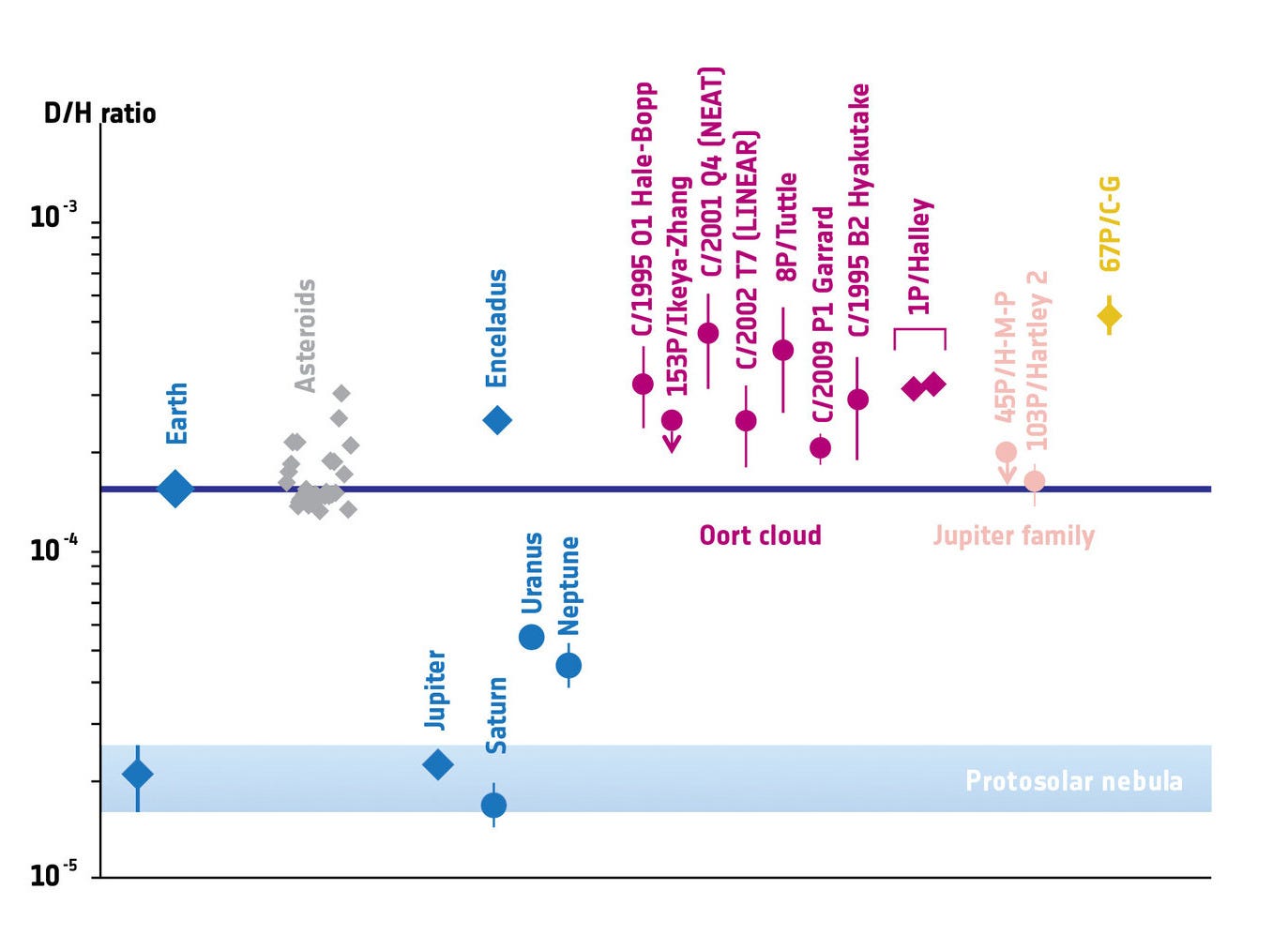
This seems to be the case with the Earth’s water. The measured ratio of deuterium to hydrogen is much higher than that found in the primordial material of the solar system. Most likely, then, our water originally formed somewhere very cold – perhaps beyond the orbit of Pluto – and then fell inwards as a long and hard rain of comets and asteroids.
The measurements of 3I/Atlas found an even more extreme case. It has a lot of deuterium, at least forty times the level seen on Earth, and thirty times more than that seen in any other comet. This tells us the comet likely formed somewhere very cold, and probably under very different conditions to those found in our solar system.
But exactly where is still elusive. Astronomers cannot trace its path, at least not for more than a few million years. Comet 3I/Atlas is far older than that. The hints we have, deuterium included, only tell us it came from a very different place, and a very different age, to the one in which we were born.
Big G: Measuring Gravity
In 1797, an Englishman named Henry Cavendish set out to weigh the world.
He did this by suspending a rod from a wire. At each end of the rod he attached small lead balls, and then arranged for a pair of larger spheres to be placed near each. The result was a small deflection in the rod, a twisting motion caused by the slight gravitational attraction between the small and large balls.
By careful measurement, Cavendish was able to calculate the strength of this gravitational force. From this, he could deduce the density of the planet. The result was remarkably accurate: today’s accepted figure is 5.514 g/cm3; Cavendish, at the end of the eighteenth century, found it to be 5.448 g/cm3.
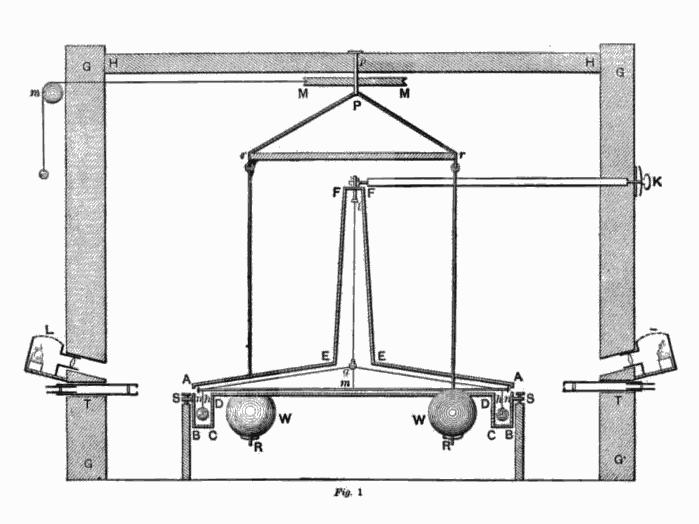
His experiment also gave us a way to measure the strength of gravity itself. Mathematically, this is given by a constant called Big G. It relates the strength of attraction two objects will feel with both their masses and the distances between them. The higher Big G is, the stronger this force will be.
This is a number of immense interest to science. The force of gravity dictates much of the world around us: it determines how fast planets move around their stars, keeps satellites in orbit, and crushes atoms to power the reactions in the core of the Sun. Big G is key to all of this, and the more accurately we can measure it, the better we can understand our world.
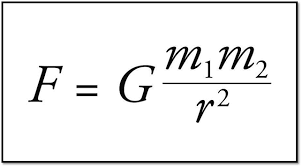
Yet doing so is hard. One problem is the weakness of gravity: the deviations it produces are slight, and hard to measure with accuracy. Another is the impossibility of shielding. There is no way to block gravitational influences, and so a passing truck, a nearby herd of sheep, or even a leaf blowing in the wind can all disturb the experiment.
As a result, we don’t know Big G very well. Things have improved since Cavendish’s day, at least slightly, but almost all the other fundamental constants are known with more accuracy. Scientists have tried many ways to change this, but in recent decades experiments have added more confusion than clarity.
The problem is, they find subtly different results. This is probably down to noise, the difficulty of measurement, and other errors. But the overall result is to add uncertainty, especially since we do not always know how big these errors are, and this leaves us in the dark about the true value of Big G.
In an effort to change this, Stephan Schlamminger, a researcher at NIST, dedicated himself to replicating an earlier experiment. If he could get the same answer as they did, then it might settle the question. Unfortunately, he did not. Instead he found several previously unrealised sources of error, and set about removing them.
The result, published in April, was yet another possible value of Big G, in this case, 6.67387x10⁻¹¹ meters3/kilogram/second2. That doesn’t solve the problem. But it might bring us a little closer. After all, every experiment adds a new data point, and contributes a little to the weight of evidence.
The End of Space Tourism?
A few years ago, it looked as though the long-promised era of space tourism was finally upon us. Two companies – Blue Origin and Virgin Galactic – had begun sending wealthy passengers to the edge of space. Their founders, the billionaires Jeff Bezos and Richard Branson, engaged in an unsightly race to be the first to fly beyond the upper atmosphere. Branson won, but only by a few days.
Since then, Blue Origin has flown seventeen commercial crews beyond the official edge of space. Virgin Galactic has sent seven, each to a slightly lower altitude than Blue Origin. But today, these flights are over.
Blue Origin paused their flights earlier this year. Officially, the company says this is temporary, and it simply wants to devote staff to other projects, including a crewed moon lander. But it also looks unlikely they will resume launches any time soon.
Virgin Galactic, on the other hand, has not flown since 2024. Back then, they retired their spaceplane, and said they were working on a new ‘Delta class’ vehicle. Details have since been limited, but last week they released photos of a new craft outside a hangar.
Virgin Galactic will probably want to fly this spacecraft in at least a few test flights this year. According to the company’s official statements, it should be ready to carry tourists early next year. If it makes it, then the spluttering age of space tourism might get a bit of a boost.
A Hint of New Physics
Over the past decade, researchers at the Large Hadron Collider have been tracking a slight anomaly in the decay of a group of subatomic particles called B mesons.
These particles are formed as the collider smashes together protons. They don’t last for long: within a fraction of a second they decay, or transform, into other particles. There are many possible combinations of particles that can result from this process. But in the one of interest, the B-meson decays into a kaon, a pion, and two muons.
To probe the laws of subatomic physics, researchers study the energies and angles at which particles emerge from collisions like these. The Standard Model of particle physics, our current best understanding of the subatomic world, gives predictions for what should happen.
Yet experiments have persistently shown the reality of this particular B meson decay to differ from these predictions. That could hint at something unknown happening, such at the presence of new types of particles.
But it could also be a statistical fluke. Despite more than a decade of study, the evidence remains weak. Indeed, these kinds of anomaly do occasionally appear, but usually fade away with more data. But, in April, a study found that in this case the more data we get, the stronger the argument seems to become. If that continues to hold true, the B meson could end up being the doorway into a new theory of nature.
Read More
The Mysterious Origins of the Third Interstellar Comet

Three weeks ago, a robotic telescope in Chile spotted a comet moving …
A Nuclear Ship For Mars: Making Sense of Space Reactor Freedom

The way NASA tells it, Space Reactor Freedom sou…
Why Have There Been So Many Fireballs in 2026?

In March, a chunk of rock and metal appeared over Lake Erie, flew at supersonic speed over northern Ohio, and then blew up in a deafening explos…
When I read “After all, every experiment adds a new data point, and contributes a little to the weight of evidence”, my first thought was “… or the evidence of weight.”🤔
I understood that GR predictions are confirmed to very high precision. Isn't that impacted by the lack of precision in G?